Indra Sawhney Case: Judgment, Facts and Why It Still Matters
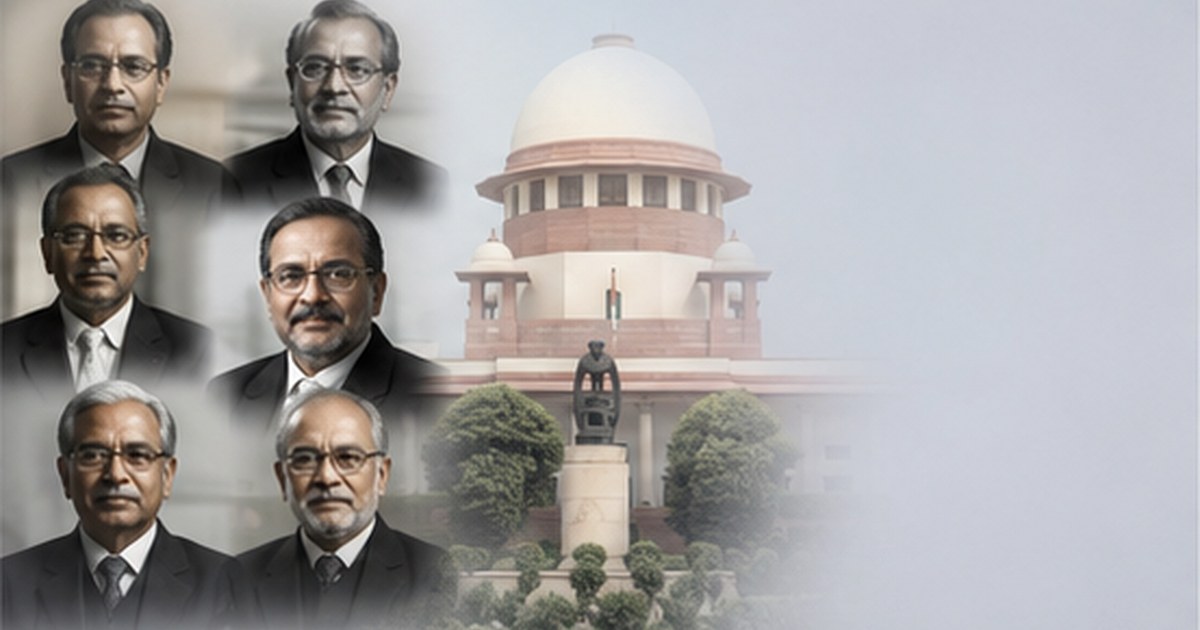
The Indra Sawhney case is the 1992 Supreme Court judgment that upheld 27% reservation for Other Backward Classes (OBCs) in Central Government jobs while placing lasting limits on how reservation can work in India. Decided by a nine-judge Bench on November 16, 1992, it introduced two rules that still govern reservation policy today: the creamy layer exclusion and the general 50% ceiling on reservations.
Formally titled Indra Sawhney & Others v. Union of India & Others, the case is better known as the Mandal Commission case. Courts continue to cite it when interpreting Article 16 of the Constitution and weighing equality of opportunity against affirmative action.
Indra Sawhney Case: Quick Facts
| Detail | Information |
| Case name | Indra Sawhney & Others v. Union of India & Others |
| Common name | Mandal Commission Case |
| Court | Supreme Court of India |
| Judgment date | November 16, 1992 |
| Bench strength | Nine judges |
| Main constitutional provision | Article 16(4) |
| Central question | Reservation for socially and educationally backward classes |
| OBC reservation | 27%, upheld |
| Creamy layer | Excluded from OBC reservation |
| Reservation ceiling | Ordinarily 50% |
| Economic criteria alone | Not sufficient to define a backward class under Article 16(4) |
| Citation | 1992 Supp (3) SCC 217; AIR 1993 SC 477 |
Background: How the Indra Sawhney Case Reached the Supreme Court
The dispute traces back to the Second Backward Classes Commission, set up under Article 340 of the Constitution and commonly called the Mandal Commission. It submitted its report in 1980, recommending reservation for socially and educationally backward classes in government jobs.
The recommendation stayed largely unimplemented for a decade. That changed on August 13, 1990, when the Central Government issued an Office Memorandum reserving 27% of civil posts and services for Socially and Educationally Backward Classes (SEBCs). The announcement triggered nationwide protests and a wave of litigation.
A second Office Memorandum, dated September 25, 1991, revised the policy further. It added a preference for poorer sections within the SEBC category and proposed a separate 10% reservation for economically backward citizens who fell outside existing quota categories. Both memoranda were challenged before the Supreme Court, and the two cases were heard together.
Key Issues the Supreme Court Examined in the Indra Sawhney Case
A nine-judge Bench was constituted because the case raised foundational questions about Article 16(4) that smaller Benches had answered inconsistently in earlier cases. The core questions were:
- How should a “backward class of citizens” under Article 16(4) be identified?
- Is caste a valid factor in that identification, and can economic status alone define backwardness?
- Can backward classes be split into sub-categories based on their degree of backwardness?
- Is there an upper limit on how much of public employment can be reserved?
- Does Article 16(4) permit reservation in promotions, not just initial recruitment?
Indra Sawhney Case Judgment: The Supreme Court’s Key Rulings
The Bench delivered a majority judgment on November 16, 1992, that went well beyond simply approving or rejecting the 1990 memorandum. It built a constitutional framework for reservation that still applies more than three decades later.
27% OBC Reservation Was Upheld
The Court held that Article 16(4) allows the State to reserve posts for a backward class it considers inadequately represented in public services, and confirmed that the 27% OBC quota fit within that provision. Reservation for OBCs, the Court ruled, is not by itself inconsistent with the constitutional guarantee of equal opportunity.
The Creamy Layer Must Be Excluded
The judgment directed that socially advanced members within OBCs, the so-called creamy layer, be excluded from reservation benefits. The goal was to keep the quota targeted at citizens who remain genuinely backward, rather than letting the same relatively advantaged families within a backward class absorb the benefit repeatedly. Following the ruling, the government drew up income and status criteria to identify and exclude this creamy layer, and that mechanism remains a permanent feature of OBC reservation.
The 50% Ceiling on Reservations
The Court ruled that reservations under Article 16(4) should ordinarily not cross 50% of available posts. It did not treat this as an absolute figure that could never be crossed under any circumstance, and left room for relaxation in extraordinary situations tied to India’s diversity, but it made clear that any such exception would need a compelling, well-documented case.
Caste as a Factor in Identifying Backward Classes
The Court declined to rule out caste altogether. It recognized that a caste can function as a social class in Indian society and can therefore be relevant to identifying backwardness. At the same time, it held that the real constitutional test is social backwardness itself, not the mere existence of a caste label, so caste could inform the analysis without automatically deciding it.
Economic Backwardness Alone Was Not Enough
The judgment held that a class cannot be classified as backward under Article 16(4) purely on economic grounds. This directly affected the 1991 memorandum’s proposed 10% quota for economically backward citizens outside existing reservation categories, which did not survive the Court’s scrutiny at the time. India’s constitutional position on this point later shifted with the introduction of Economically Weaker Sections (EWS) reservation through a separate constitutional amendment, so this part of Indra Sawhney needs to be read alongside that later change rather than as the final word on economic quotas.
Reservation in Promotions
The Bench held that Article 16(4), as it stood in 1992, did not extend to reservation in promotions, only to initial recruitment. It gave this ruling prospective effect and allowed transitional arrangements for promotion quotas already in place. Parliament later added Article 16(4A) through the 77th Constitutional Amendment, creating specific authority for reservation in promotion for Scheduled Castes and Scheduled Tribes, subject to conditions laid down in subsequent judgments. The original Indra Sawhney position on promotions should therefore be read as historical rather than as current law.
Sub-Classification of Backward Classes
The Court found no constitutional bar on splitting backward classes into groups such as “backward” and “more backward,” provided the split tracks real differences in social backwardness. The reasoning addressed a practical risk: treating all backward groups as one uniform bloc can let comparatively stronger groups within that bloc capture most of the available benefits, leaving the most disadvantaged sub-groups underserved.
Why the Indra Sawhney Case Matters
Indra Sawhney did more than settle one dispute over a 1990 policy memo. It built the operating rules for reservation policy in India:
- OBC reservation in public employment can be constitutionally valid.
- The creamy layer within OBCs must be excluded from quota benefits.
- Reservation under Article 16(4) should ordinarily stay within 50%.
- Economic disadvantage alone cannot define a backward class under Article 16(4), as the provision stood in 1992.
- Caste can be relevant to identifying social backwardness, but is not the sole test.
- Backward classes can be sub-classified where genuine differences in backwardness justify it.
- As interpreted in 1992, Article 16(4) did not extend to promotions.
These seven principles are why Indra Sawhney is still taught as one of the foundational judgments on affirmative action and equality under the Indian Constitution.
Indra Sawhney Case vs the Mandal Commission: What’s the Difference
The two names get used interchangeably, but they refer to different things. The Mandal Commission was the government body that studied backwardness and recommended the 27% quota in its 1980 report. The Indra Sawhney case was the Supreme Court litigation, filed a decade later, that tested whether the government’s attempt to implement those recommendations could survive constitutional scrutiny. The judgment is the legal authority; the Commission’s report was the policy input that led to it.
How Later Law Changed What Indra Sawhney Decided
Reservation law kept evolving after 1992. Constitutional amendments and later Supreme Court rulings have since addressed reservation in promotions, consequential seniority for promoted employees, EWS reservation, and state-level quota disputes that test the 50% ceiling. For that reason, individual rulings from Indra Sawhney, particularly on promotions and on the treatment of economic criteria, need to be read together with these later developments rather than in isolation. The creamy layer principle and the general 50% rule, by contrast, remain intact and continue to anchor how courts assess new reservation policies.
Conclusion
The Indra Sawhney case remains the starting point for any serious discussion of reservation law in India: it upheld 27% OBC reservation, introduced the creamy layer exclusion, and set the general 50% ceiling that courts still apply. Its reading of Article 16(4) continues to shape reservation policy, even as later constitutional amendments and judgments have refined specific parts of the framework, particularly around promotions and economic criteria.
Frequently Asked Questions
What is the Indra Sawhney case?
It is a 1992 Supreme Court judgment, Indra Sawhney & Others v. Union of India & Others, that decided how reservation for backward classes could operate under Article 16(4). It is commonly called the Mandal Commission case.
When was the Indra Sawhney case decided?
The Supreme Court delivered its judgment on November 16, 1992.
How many judges decided the Indra Sawhney case?
A nine-judge Bench of the Supreme Court of India heard and decided the case.
What did the Supreme Court rule on OBC reservation?
It upheld the 27% reservation for OBCs in Central Government employment, subject to the exclusion of the creamy layer.
What is the creamy layer principle?
It requires that socially advanced members of OBCs be excluded from reservation benefits so the quota reaches citizens who are genuinely backward.
What is the 50% rule from the Indra Sawhney case?
Reservation under Article 16(4) should ordinarily not exceed 50%, with relaxation possible only in extraordinary, well-justified situations.
Did the Indra Sawhney case allow reservation in promotions?
No. The Court held that Article 16(4), as it stood in 1992, applied to recruitment only. Article 16(4A), added later, created separate authority for reservation in promotions for SCs and STs.
Can economic criteria alone define backwardness under Article 16(4)?
Not under the framework the Court applied in 1992. India’s later EWS reservation operates under a different constitutional provision.
Sources
- Supreme Court of India judgment, Indra Sawhney & Others v. Union of India & Others, 1992 Supp (3) SCC 217 — available via Indian Kanoon
- Department of Personnel & Training (DoPT), Government of India — Office Memoranda on OBC reservation and creamy layer criteria
- PRS Legislative Research — background on the 77th and 103rd Constitutional Amendments
- Britannica — overview of the Mandal Commission and its recommendations
- The Hindu — coverage of subsequent reservation-law developments